What Is a Lead Generation Funnel and How It Works
A click is not a lead. It is only an opportunity that can disappear in seconds if the page, message, and next step do not line up. So, what is a lead generation funnel? It is the planned path that moves a visitor from a traffic source to a measurable action, usually an opt-in, form submission, registration, quote request, or referral signup.
For marketers running paid ads, solo campaigns, affiliate offers, traffic exchanges, or email promotions, the funnel is the operating system behind list growth. It gives each visitor one clear job, records whether that job happened, and creates a way to follow up after the first visit. A dedicated landing page is often the center of that process because it removes the distractions found on a general website.
What Is a Lead Generation Funnel?
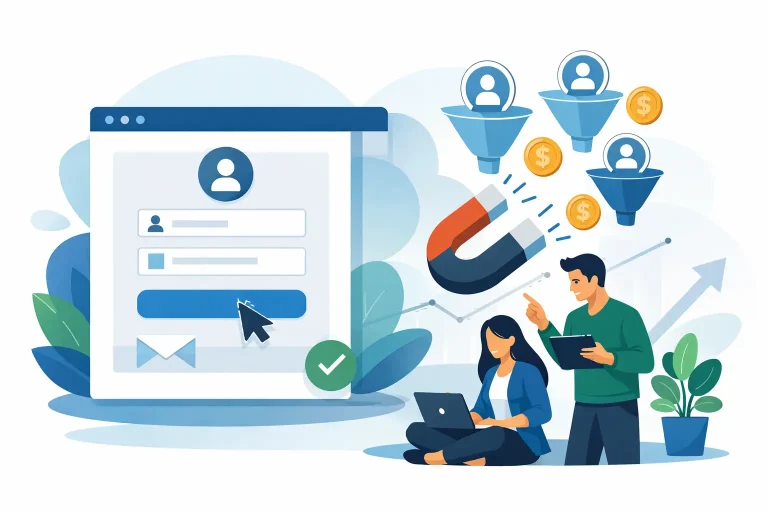
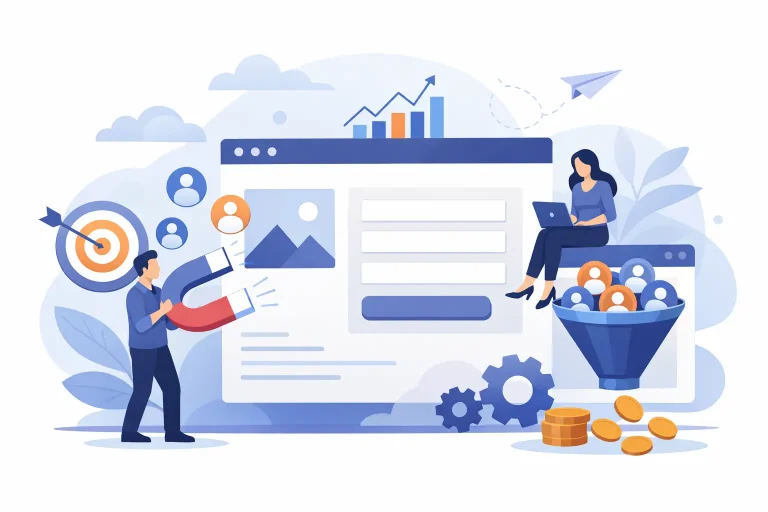
A lead generation funnel is a sequence of pages, messages, and follow-up actions designed to collect contact information or another identifiable conversion from a targeted visitor. The funnel begins before someone sees your landing page. It starts with the traffic source, the promise used to earn the click, and the audience’s intent.
The core job is simple: match an offer to a visitor, make the value clear, reduce friction, and capture the lead before sending that person to the next step. That next step might be a thank-you page, a sales page, an affiliate offer, a calendar, or an email sequence.
A funnel is not automatically complicated. For many campaigns, it is one ad or promotional link, one focused opt-in page, a confirmation page, and an automated follow-up email. More steps can improve qualification or raise average order value, but they can also lower completion rates. The right number of steps depends on the traffic temperature, the offer value, and what information you truly need.
The Basic Parts of a Lead Generation Funnel
Every working funnel has a few connected parts. If one part is weak, more traffic usually just makes the problem more expensive.
1. Traffic source
Traffic is where the visitor comes from: an ad, social post, search result, solo email, banner, referral, traffic exchange, or existing email list. Each source carries different expectations.
A person who searches for a solution is usually closer to taking action than someone who clicks an incentive-driven promotion. Cold paid traffic often needs more context and proof. Warm email traffic may need only a direct reminder and a clear button. Do not use the same page assumptions for every source.
2. Landing page
The landing page turns interest into action. It should continue the promise made in the ad or link, state the benefit quickly, and focus on a single primary conversion goal.
For lead capture, the page usually includes a headline, a short explanation of the offer, relevant proof or details, and a form or call to action. The page does not need to explain everything about your business. Its job is to earn the next step.
This is why campaign-specific hosted pages matter. A dedicated URL gives you control over the message, tracking, page speed, and destination without forcing visitors through a broad navigation menu or unrelated website content.
3. Lead capture mechanism
The capture mechanism is the form, registration field, quiz result gate, phone request, or other action that identifies the visitor. Ask for the minimum information required to run the next step well.
An email-only opt-in usually produces more volume than a form requesting name, phone number, company size, budget, and job title. But higher volume is not always better. If a sales team needs to call leads, a phone number and a qualifying question may be worth the extra friction. Build the form around your follow-up process, not around a vague preference for collecting more data.
4. Confirmation and routing
After the form is submitted, the visitor needs a clear destination. A thank-you page can confirm the signup, tell them to check their inbox, present a low-friction next action, or route them to a relevant offer.
This step is often underused. If the lead has just shown intent, that is the best moment to offer a next action: watch a short demo, answer one more question, book a call, or view a related promotion. Keep it relevant. Sending a new lead to an unrelated offer may create short-term clicks while reducing trust and downstream response.
5. Follow-up
Most leads do not become customers on the first visit. Follow-up turns captured contact information into a real marketing asset.
A basic sequence might deliver the promised resource first, then provide proof, answer a common objection, and present the next offer. Affiliate marketers may use follow-up to introduce related products after the original promotion. Local operators may use it to move quote requests toward a call or appointment. The content and timing vary, but the principle stays the same: the funnel should continue after the form submission.
How the Funnel Works in a Real Campaign
Consider a marketer promoting a free checklist to people interested in improving email list growth. An ad or promotional link promises a practical checklist. The landing page repeats that promise and asks for an email address. Once submitted, the visitor lands on a confirmation page that delivers the checklist and mentions a related training offer.
The email system immediately sends the checklist, then follows with a short sequence covering common list-building mistakes and a relevant paid recommendation. The marketer tracks opt-in rate, email opens, clicks, offer conversions, and revenue per visitor.
That is a funnel because each stage has a defined purpose and can be measured. The ad is responsible for attracting the right click. The page is responsible for converting the click to a lead. The follow-up is responsible for developing that lead. The offer is responsible for producing a sale or other business outcome.
If 1,000 visitors produce 300 leads, the page has a 30% opt-in rate. If 15 of those leads buy a $40 offer, the campaign produces $600 in revenue before traffic costs. Those numbers tell you where to investigate. A low opt-in rate points toward traffic-message mismatch, weak page clarity, slow load time, or excessive form friction. A strong opt-in rate with weak sales points toward lead quality, follow-up, or offer fit.
Build the Funnel Around One Conversion Goal
The most common funnel mistake is asking visitors to make too many decisions. A page with multiple offers, navigation links, unrelated banners, and several calls to action gives the visitor reasons to leave instead of reasons to convert.
Choose one primary action for the page. If the goal is an email opt-in, the page should make the opt-in feel like the natural response. If the goal is a quote request, the form and copy should be built around the quote, not a generic newsletter signup.
Message match matters just as much. If an ad says “Get a free landing page conversion checklist,” the page headline should not switch to a broad claim about business growth. The visitor clicked for a specific outcome. Deliver that context immediately.
There is a trade-off between brevity and persuasion. A simple page can work well for warm traffic and familiar offers. Cold traffic, higher-ticket services, or skeptical audiences may need more explanation, testimonials, examples, and objection handling. Test the shortest page that credibly supports the action you want.
What to Measure Before You Change Anything
Do not judge a funnel only by leads generated. Cheap leads that never open an email, answer a call, or take the next action can drain a budget quickly. Track the full chain from visit to business result.
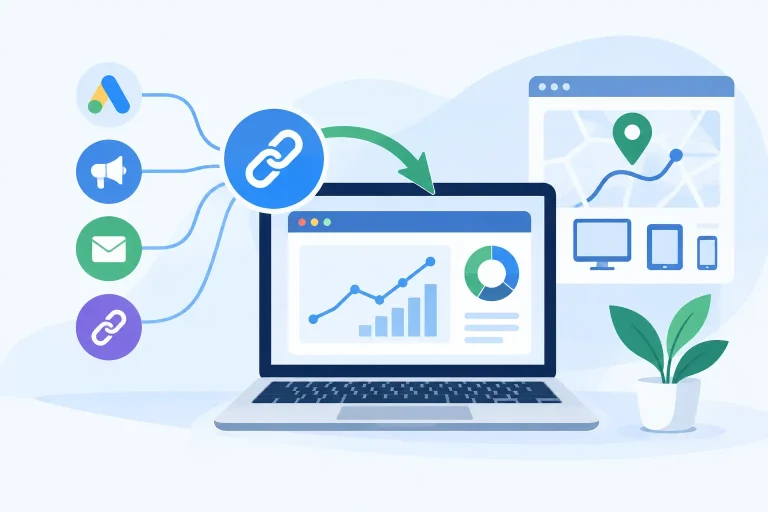
At minimum, monitor visitors, conversion rate, cost per lead, lead source, confirmation-page clicks, email engagement, and final conversion rate. When possible, use unique tracking parameters or separate campaign URLs by source. This prevents you from treating all traffic as equal when one source is producing better leads than another.
Test one meaningful variable at a time. Start with the headline, lead magnet, form length, call-to-action wording, or source-to-page message match. Changing the page design, offer, traffic source, and follow-up sequence all at once creates data that is hard to use.
Also watch operational failures. A broken form, slow mobile page, misconfigured redirect, or missing confirmation email can destroy a campaign without showing up as a copy problem. Campaign infrastructure is part of conversion rate optimization. A focused page must load, submit, route, and track reliably before any creative improvement can matter.
When a Funnel Needs More Than an Opt-In Page
A basic opt-in funnel is enough when the offer is simple and the audience is ready to engage. Add qualification when lead handling is expensive, sales capacity is limited, or the product requires a better fit. Add a pre-sell page when cold visitors need education before seeing the form. Add retargeting when the economics support reaching non-converters again.
More complexity should earn its place. Each added page, question, or redirect should either improve lead quality, improve tracking, or increase the likelihood of the next action. If it does none of those things, remove it.
A lead generation funnel works best when it is treated as a measurable campaign path, not a one-time page build. Publish a clear offer, give traffic a focused destination, capture only the information you can use, and follow up with a reason to continue. Then let the numbers show you which step deserves attention next.